Hum Bulbulain Hain (we are the Bulbuls)
The bulbul is a cherished songbird frequently featured in Persian, Urdu, and Indian poetry as a symbol of eternal love, longing, and the lover's pining for the rose, the beloved. Though the bulbul of poetry is symbolic, watching real bulbuls sing endlessly among flowering trees makes it easy to understand how they came to embody longing and devotion in poetry.
chūñki gul raft-o-gulistāñ dar guzasht
na-shinvī zaañ pas ze-bulbul sarguzisht
When the rose is gone and the garden faded,
thou wilt hear no more the nightingale's story.
by Rumi ( English Translation: Reynold. A. Nicholson)
In classical Persian poetry, the word bulbul appears in the original text. However, when these poems were translated into English, especially by early Orientalist scholars, the word was often rendered as “nightingale.” I am guessing, since the nightingale already occupied a prestigious place in western poetic imagination, it became the natural analogue. A familiar symbol was chosen over the strangeness of retaining bulbul.
From a modern ornithological perspective, bulbuls and nightingales are entirely different birds, belonging to different families. Beyond taxonomy, Bulbuls hold significant place in the folklore and poetry of many cultures. In South Asia in particular, they surface in regional poetry, songs, and oral traditions as signs of seasonal change, gardens, and domestic life. Their strongest literary and mystical associations, however, remain rooted in Persian tradition.
If birds had personalities, bulbuls would be the outspoken ones. Medium-sized and quick, often crested and always alert, they are found from Africa to East Asia, thriving in forests, scrublands, orchards, and cities alike. Largely frugivorous but opportunistic feeders, they are as important to ecosystems as they are persistent in voice. Most wear modest shades of brown, grey, or olive, sometimes brightened by a flash of red or yellow beneath the tail.
Today, bulbuls comprise around 160-170 species, native to Africa, the Middle East, South and Southeast Asia, and parts of East Asia. Of these, 22 species are found in India.
Bulbuls continue to be caged and sold as pets and are often taken far from their native habitats. Many species are highly territorial, and when introduced to regions such as the United States, South America, and Australia, they have caused harm to local flora and fauna.
Enjoy the bulbuls in their native habitat.
Here are a few that I share.
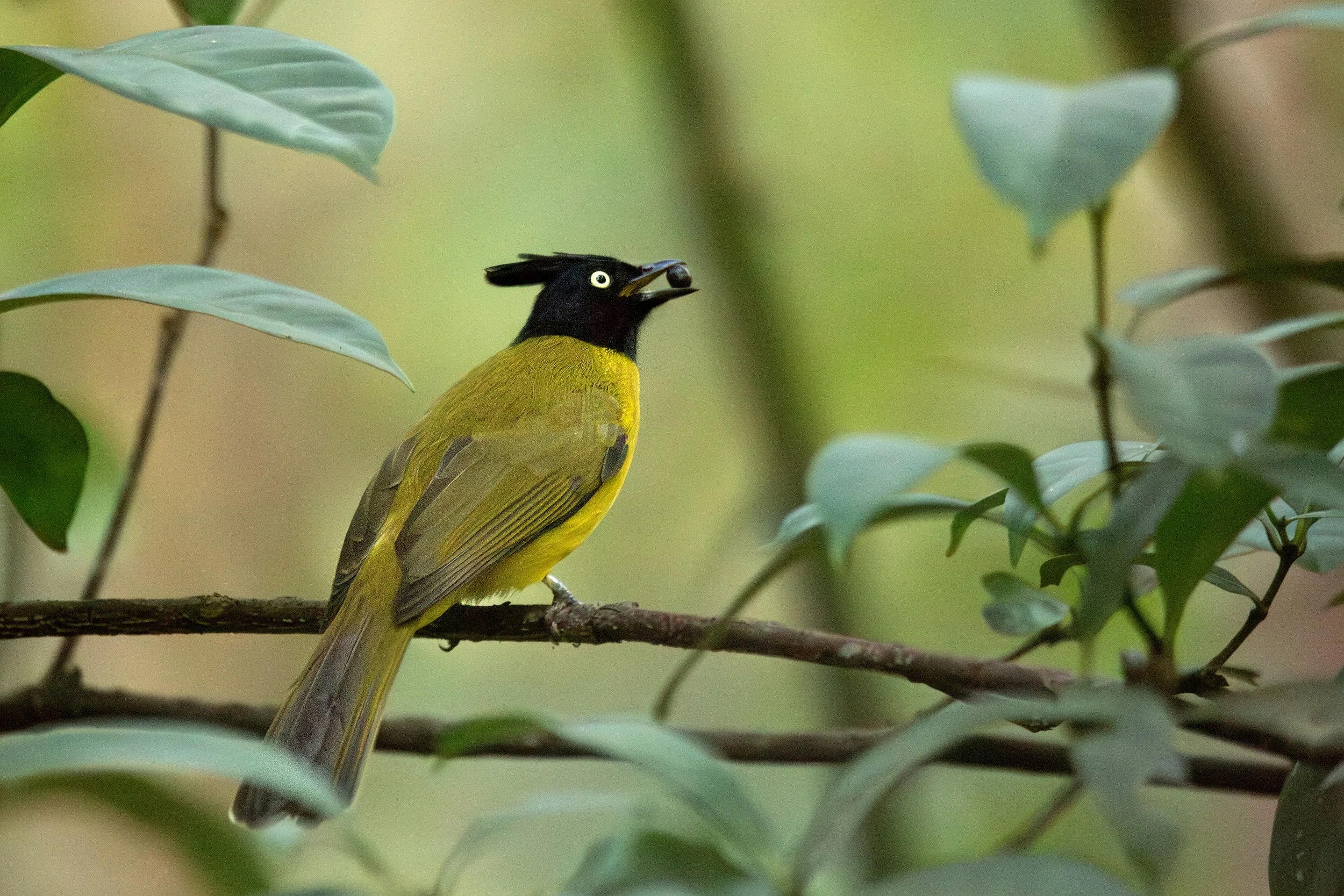
Black-Crested Bulbul, Chiang Mai, Thailand, December 2024.
My first encounter of the Black-crested was in Arunachal. Even though it was from quite a distance, first encounters are always the best.
The black-crested always seems to wear a look of surprise, thanks to its pale eye set against a completely black head. This Bulbul is restless and agile, often moving quickly through the mid to upper canopy, rarely staying still for long. It is a highly vocal species, with a varied series of whistles and chatter that often give away its presence before it is seen.
It is a creature of dense forests and thick scrublands, where it blends into its surroundings. Native to a broad region extending from the Indian subcontinent to Southeast Asia.
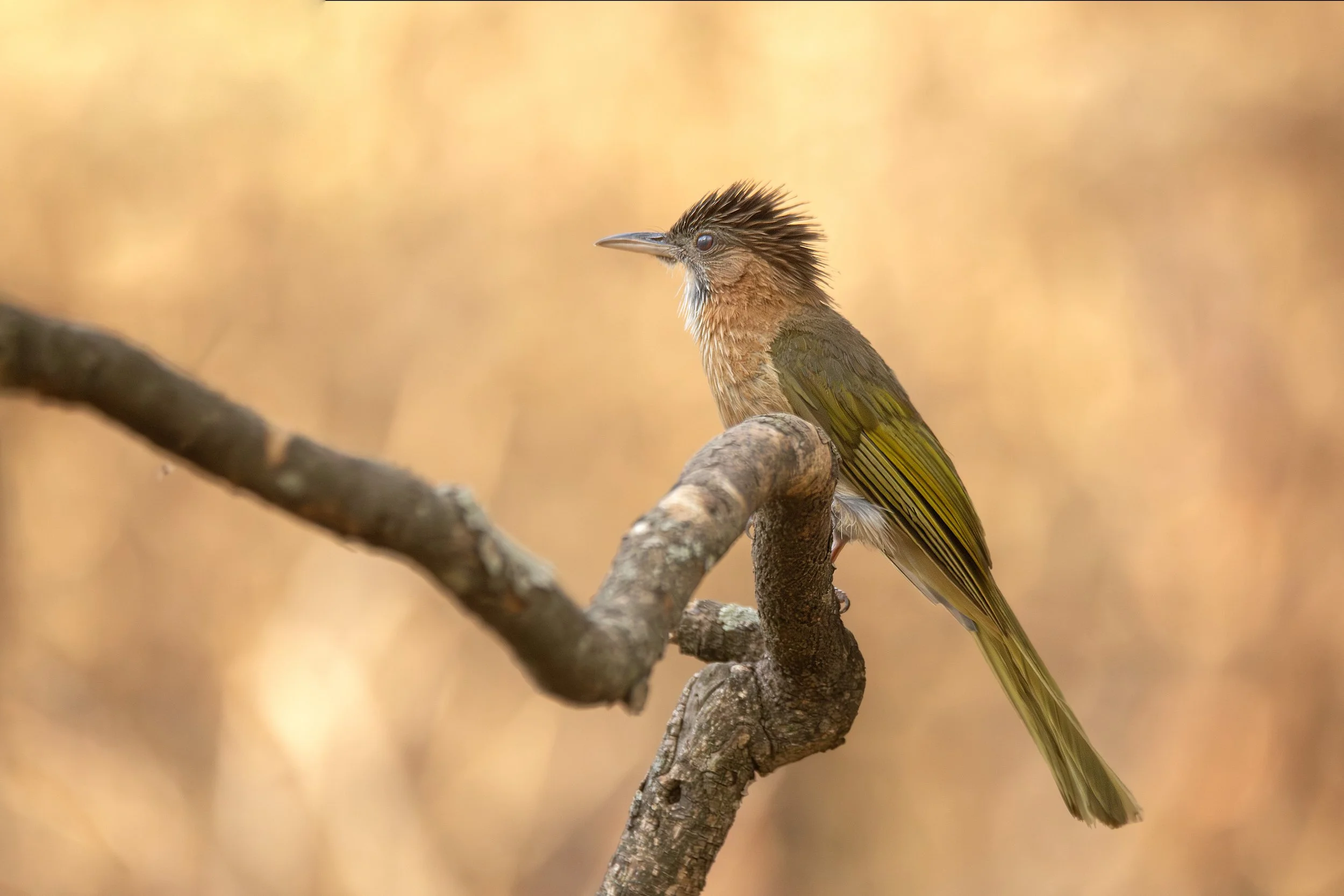
Mountain Bulbul, Bhimtaal, India, June 2024
The Mountain Bulbul tends to be more reserved, keeping to the middle layers of broadleaved forests and often remaining partly concealed in foliage. This photo marks my first sighting of the species, despite numerous trips to the Kumaon region. Incidentally, in that very same year, I went on to see many more elsewhere.
I found it to be a striking bird, with green wings, a rufous belly, and a white throat. Its rich, melodious call often carries far through the forest, even when the bird itself remains hidden. In some regions, it shows subtle altitudinal movements, descending slightly in winter.
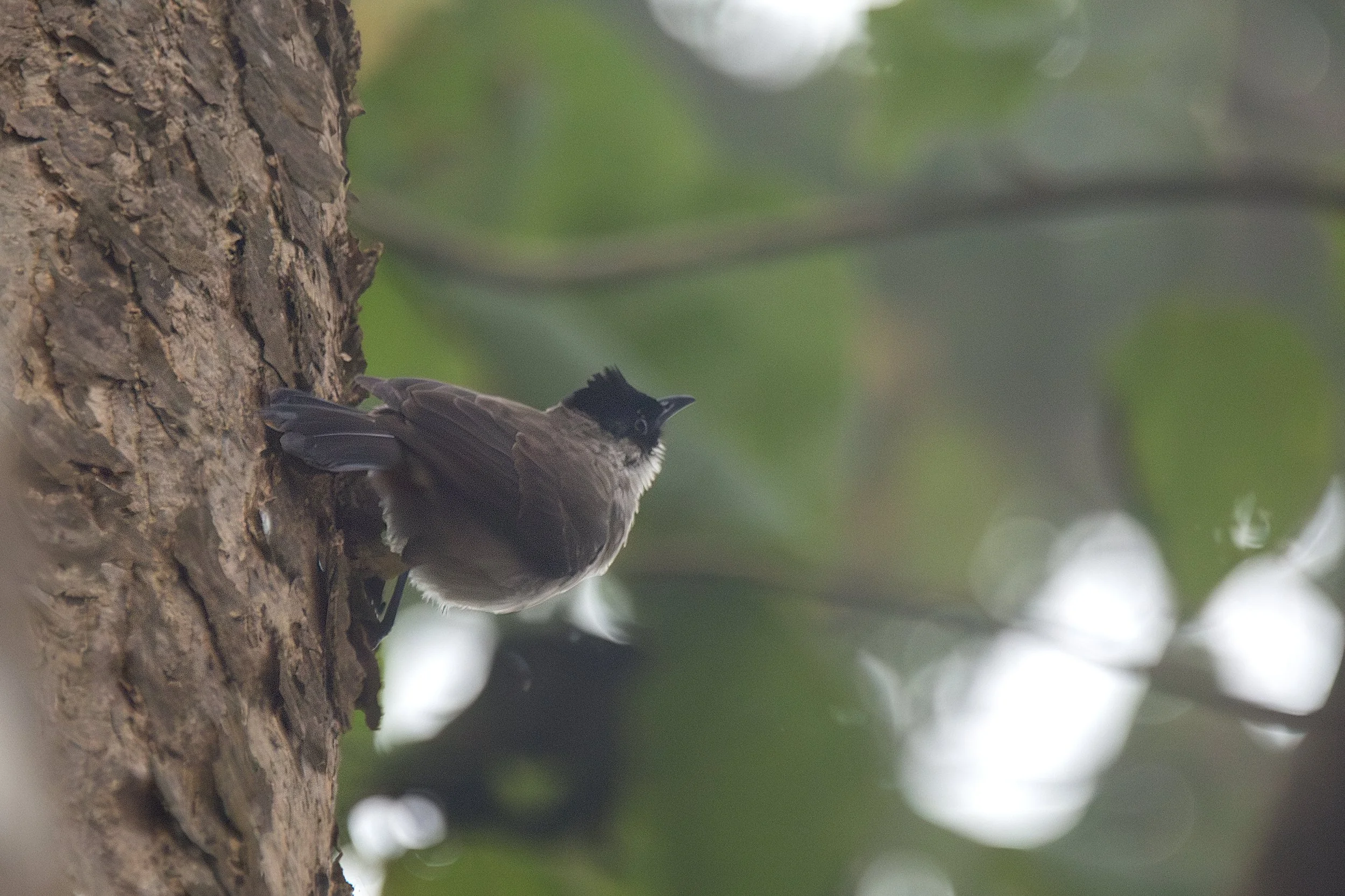
Sooty-Headed, Chiang Dao, Thailand, Dec 2024
It looked a lot like the Red-vented Bulbul (the most common bulbul in India). With its short black crest and black facial mask contrasting with whitish grey cheeks, the Sooty-headed Bulbul felt familiar at first glance. Only later did the absence of the red vent and its gregarious, noisy behaviour give it away. Individuals constantly keep in touch with soft calls as they move through trees and shrubs.
It is an opportunistic feeder, readily switching between fruits, insects, and even human food scraps, which partly explains its success in disturbed and urban landscapes. During the breeding season, Sooty-headed Bulbuls can become surprisingly bold and territorial, frequently chasing away much larger birds from nesting areas.
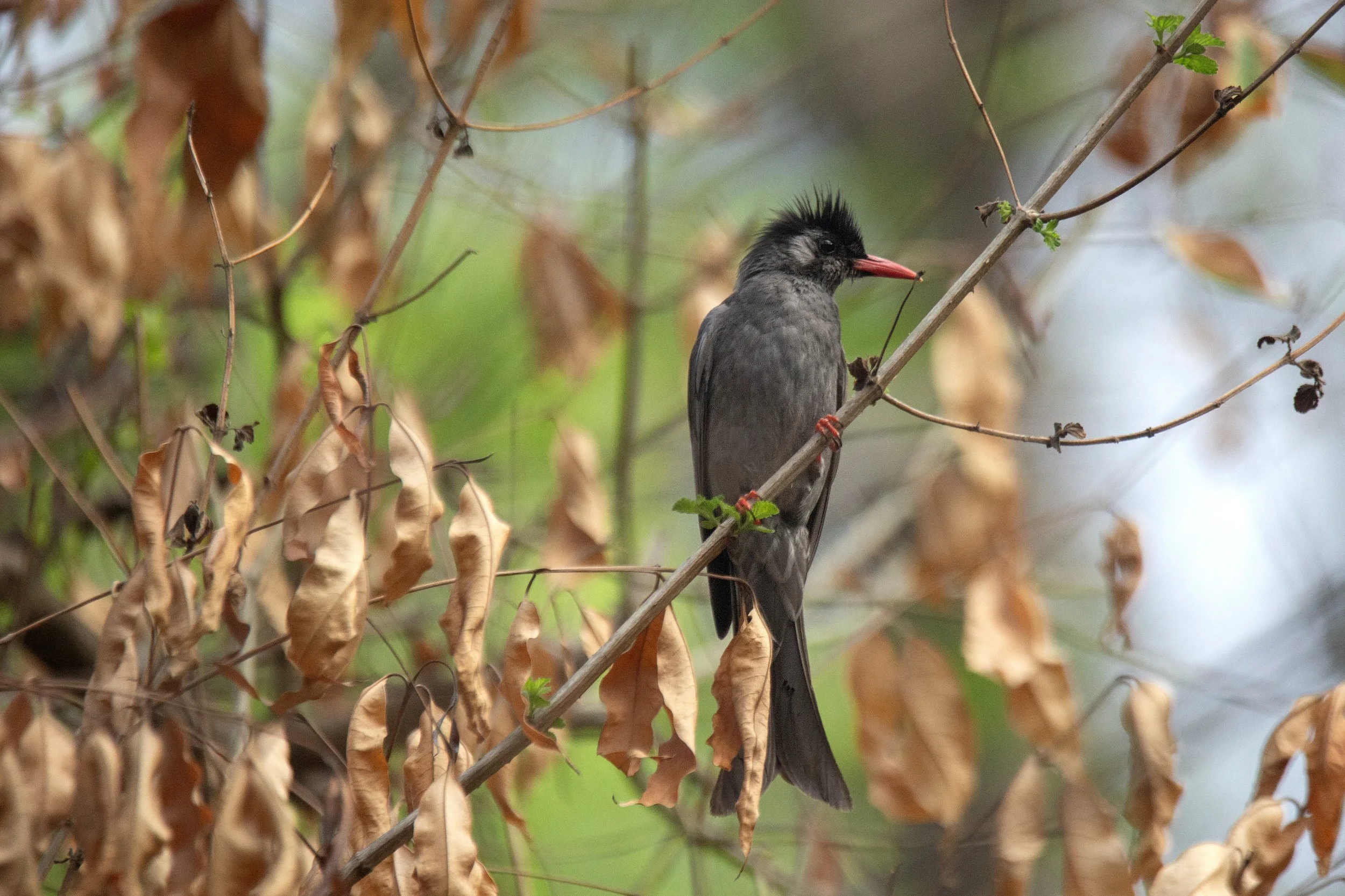
Black Bulbul, Almora, India, June 2023
The reddish bill and legs stand out against the predominantly dark plumage, topped with a small, fluffy crest. The colour of the head varies by region, ranging from light grey to black. It prefers the upper canopy, where it moves confidently between treetops, often silhouetted against the sky. Unlike many shyer bulbuls, it feeds openly and energetically, showing little hesitation in exposed positions.
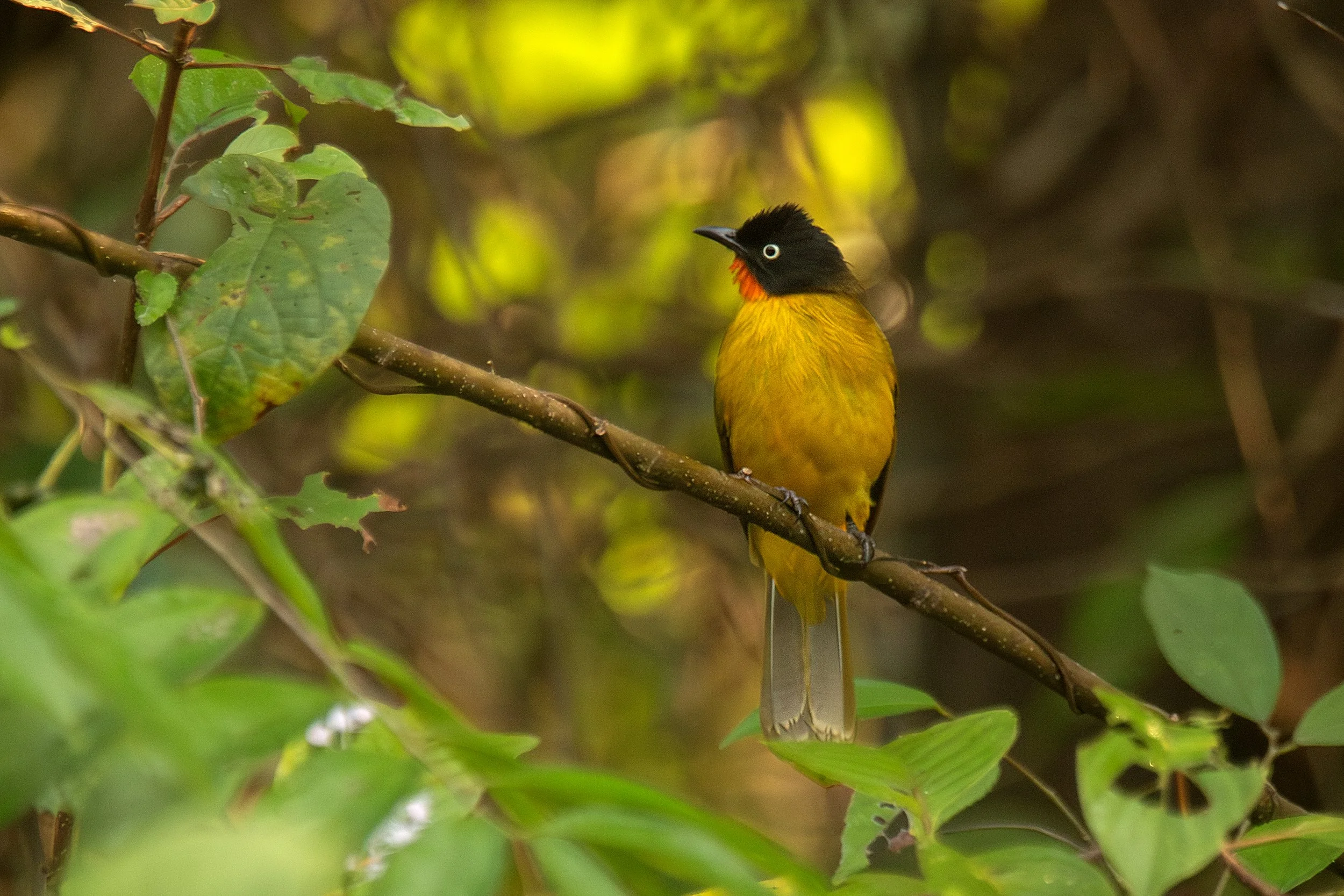
Flame-throated Bulbul, Goa, India, December 2025.
Unlike many other bulbuls, the Flame-throated Bulbul is quiet and unobtrusive, usually moving slowly through dense evergreen forest in pairs or alone. I first encountered it by chance in Coorg in 2016. I didn’t even know about the bird when it suddenly appeared from nowhere. The photograph doesn’t quite capture that startling red of the throat against the dense green foliage.
It usually forages in the lower and middle layers of evergreen forests, moving methodically rather than restlessly. Its calls are gentle and less raucous than those of many other bulbuls, making it easy to overlook even when nearby.
This photograph is from the second time I saw the bird, in Goa. The birder with me could hear its call, though I couldn’t differentiate it from the many other forest sounds. With his experience, and a little patience and perseverance, the bird eventually appeared, giving us time to enjoy this lovely beauty.
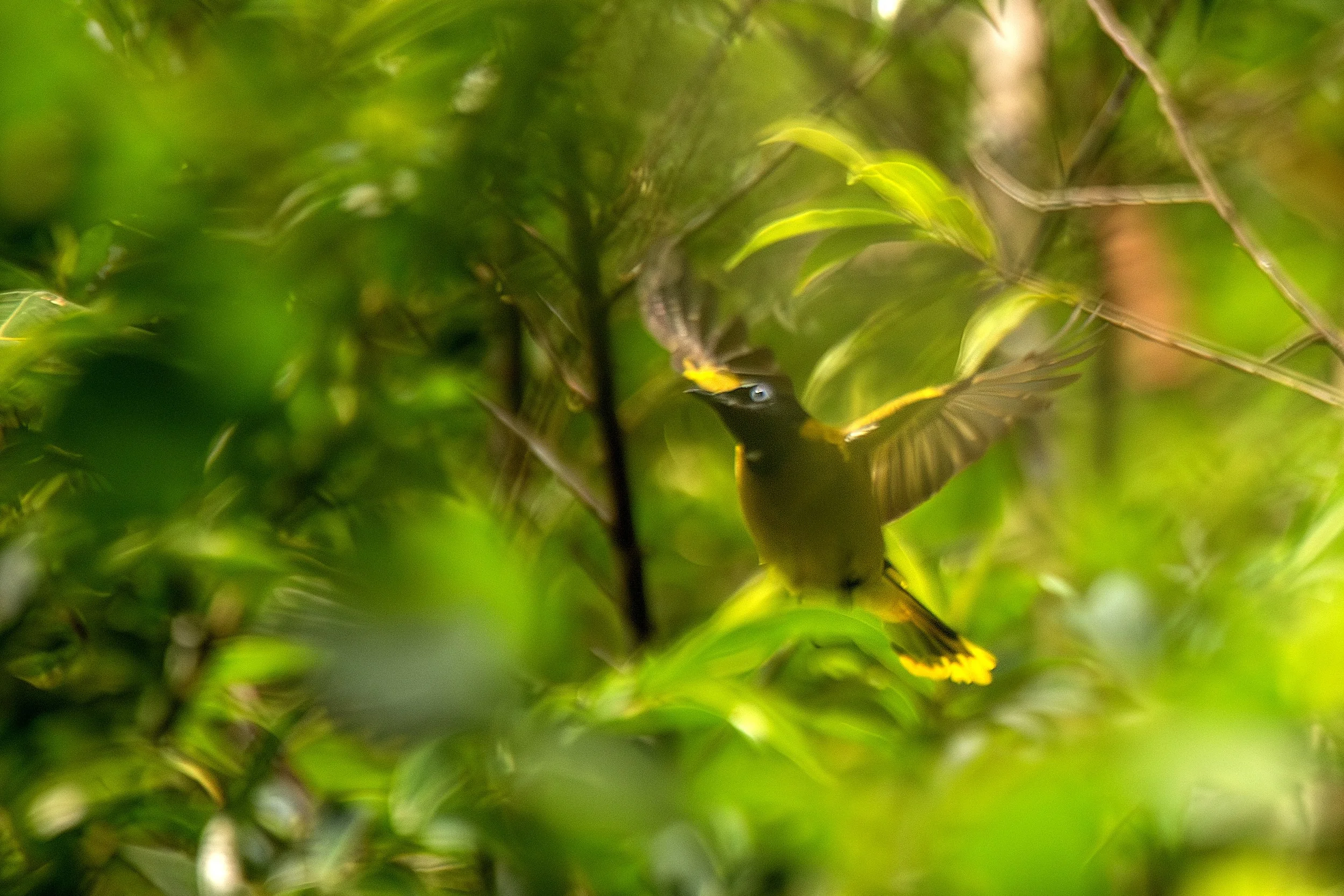
Black-headed Bulbul, Pantai, Malaysia, Aug 2024
The Black-headed bulbul is a species of bulbul that lacks a crest. It resembles the Black-crested Bulbul but differs in the absence of a crest and its distinctive blue eyes. Its pale blue eyes are unusual among bulbuls and make it especially striking in dense forest light.
It feeds largely on fruits and berries, sometimes pausing deliberately before flying to the next perch. It is occasionally seen joining mixed-species foraging flocks, especially in evergreen forests.
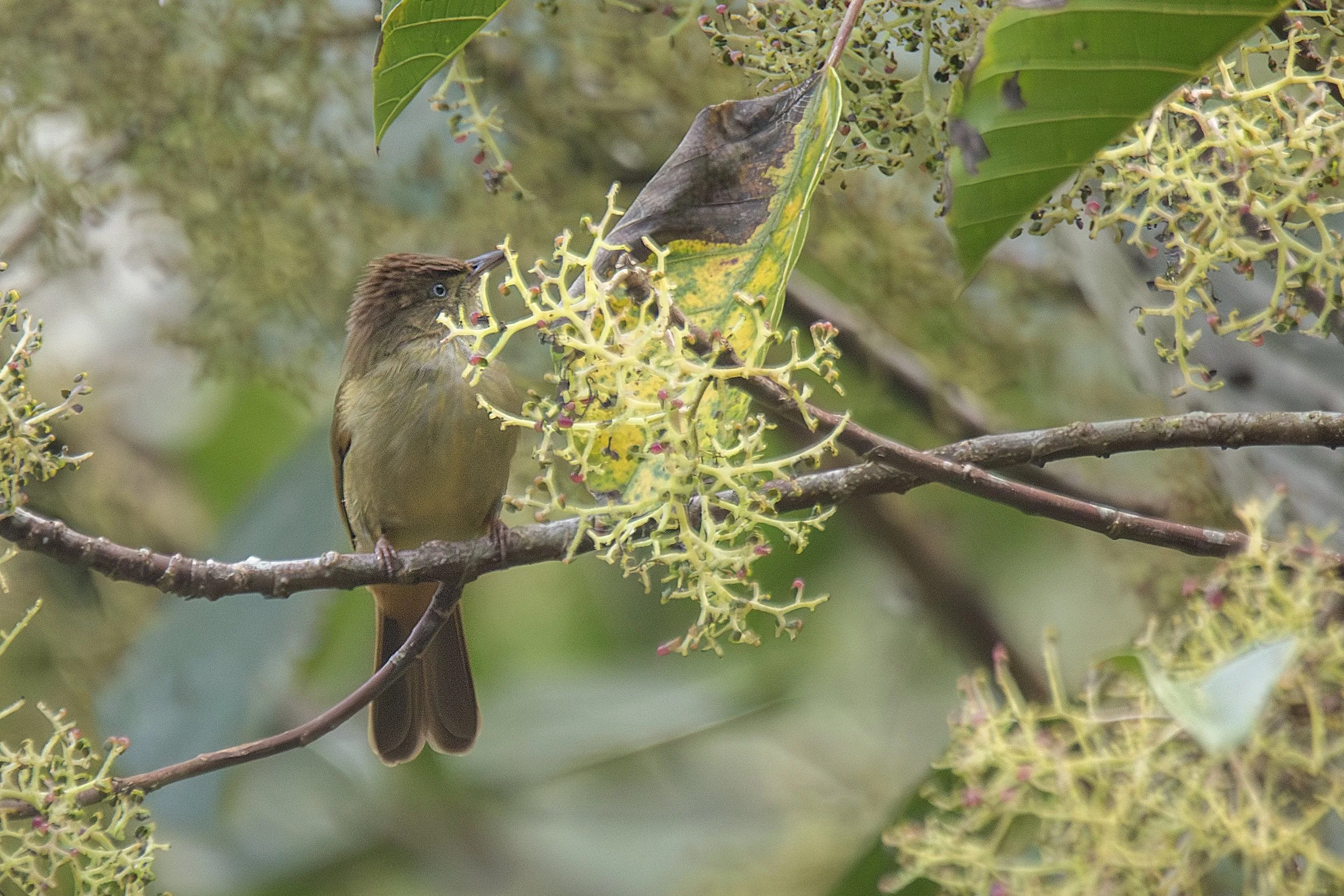
Grey-Eyed Bulbul, Chiang Dao, Thailand, Dec 2024.
The Grey-eyed Bulbul may be relatively plain and not especially melodious, yet it remains a pleasant sight as it moves lightly through the trees.
It is a calm, unobtrusive forest bird, usually encountered singly or in pairs, moving slowly through the mid-canopy rather than joining noisy flocks.
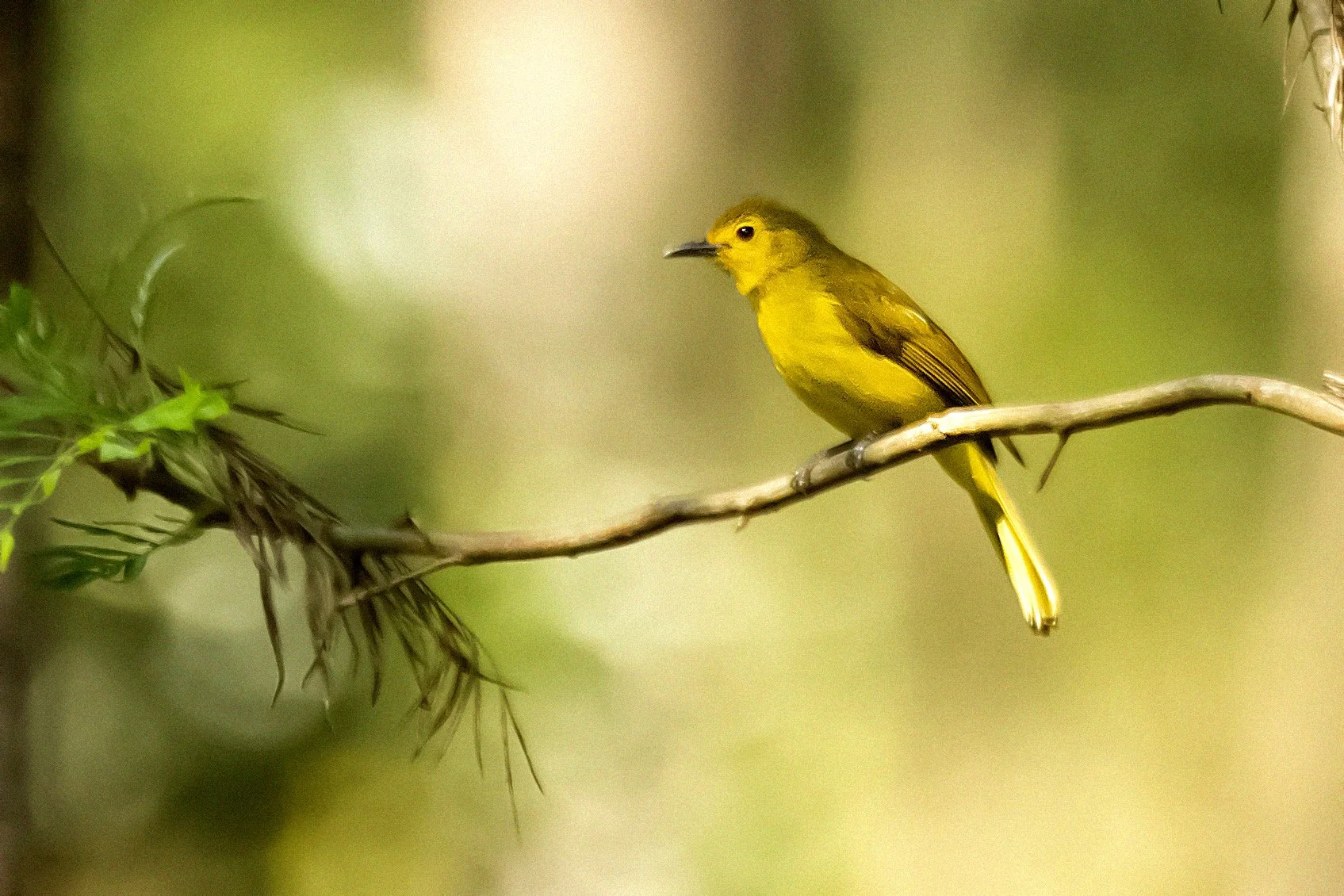
Yellow-browed, Chikkamagaluru, Karnataka, India, Jan 2023
One of the few crestless bulbuls, the Yellow-browed Bulbul is native to the forests of South India and Sri Lanka. It is often difficult to spot, as it blends well into the dense foliage below the forest canopy. During my initial encounters, I could only catch a glimpse of a yellow blur from a distance.
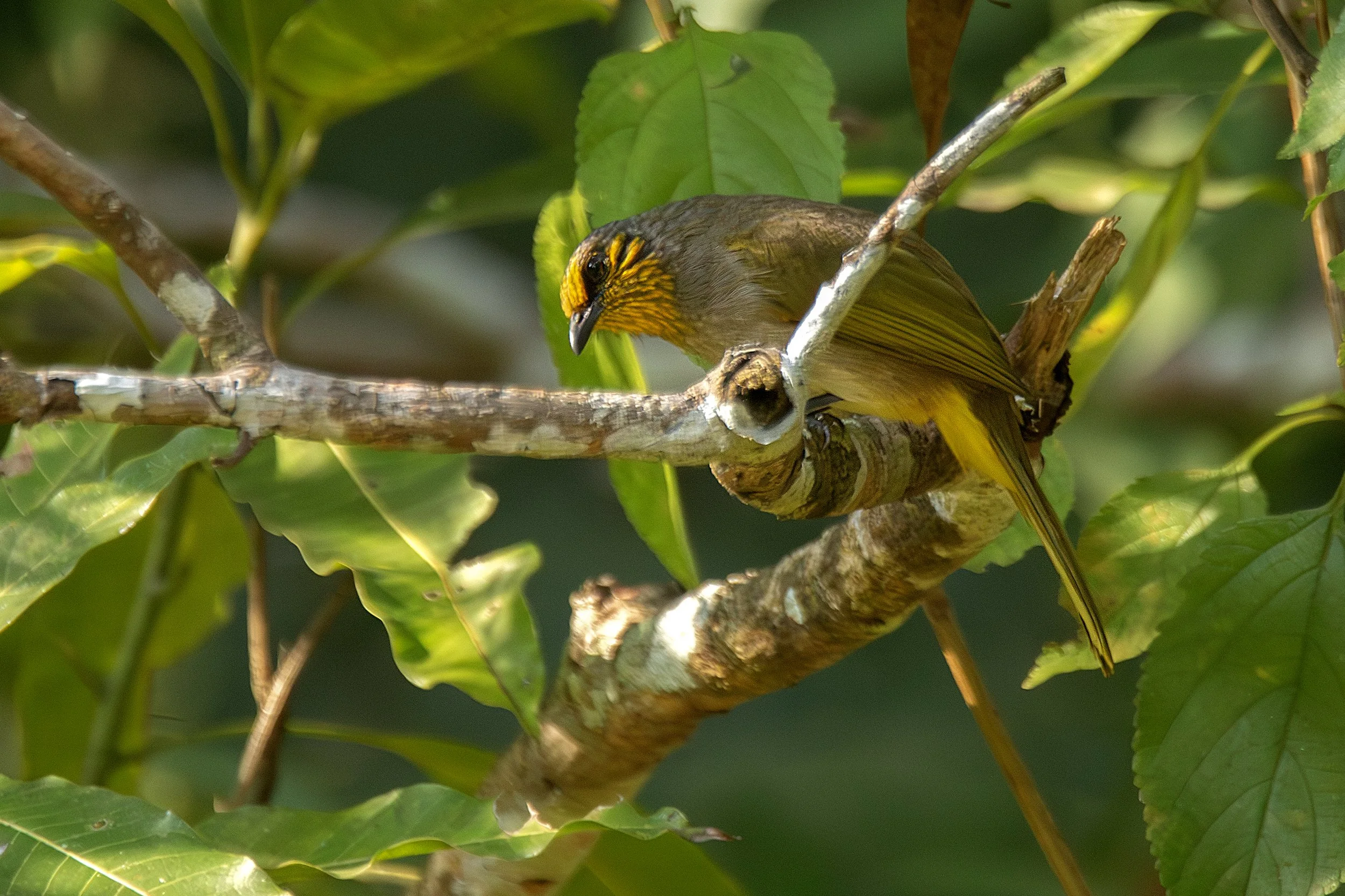
Stripe-Throated Bulbul, Chiang Dao, Thailand 2024
Well I liked this one. It has a lively, adaptable personality that shows up clearly in the field.
The Stripe-throated Bulbul is an active and vocal species, usually encountered in pairs or small groups along forest edges, scrub, and secondary growth. It forages energetically in the lower and middle layers, its frequent chatter often giving it away before it comes into view.
Although its call was loud, it struck me as melodious. That said, not all bulbuls are gifted singers, and some species are regarded as among the least melodious in the songbird family.
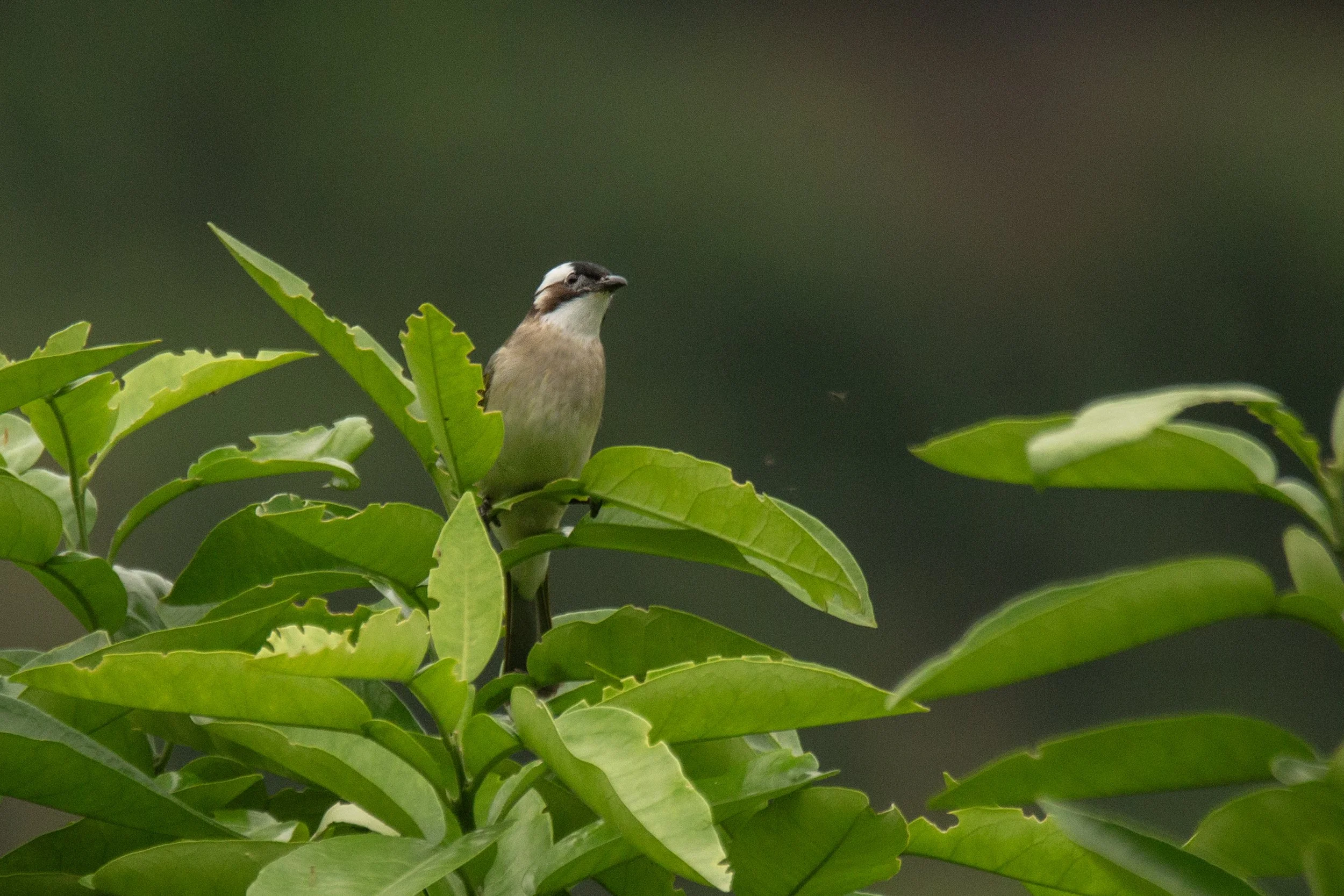
Light-vented Bulbul, Guilin, China, April 2016
Also known as the Chinese Bulbul, the Light-vented Bulbul is a common songbird of gardens, parks, and forests. It is notably unafraid of humans and often feeds openly in cultivated areas and city greenery.
In traditional Chinese art, the Light-vented Bulbul is often associated with longevity and enduring companionship, especially when depicted in pairs. When paired with peonies, it takes on added symbolism of prosperity and honour.
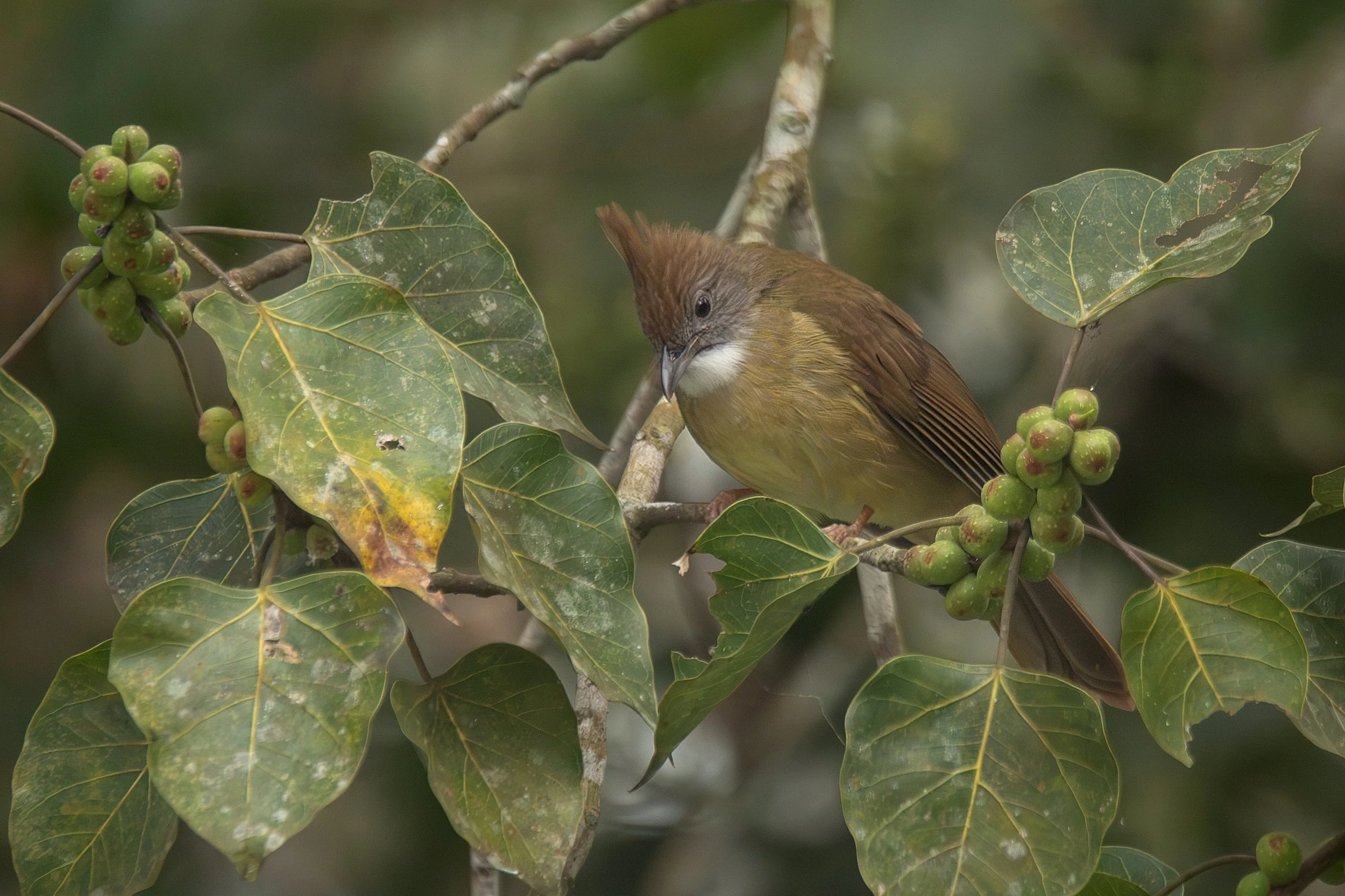
Puff-Throated Bulbul, Chiang Dao, Thailand 2024
I saw many of these, usually in noisy flocks. I was told that when figs and other fruiting trees are in season, they tend to gather this way. Outside of such fruiting events, they are more often seen singly or in pairs. As the name suggests, they have a distinctly puffy white throat, at times almost appearing like a separate entity of its own.
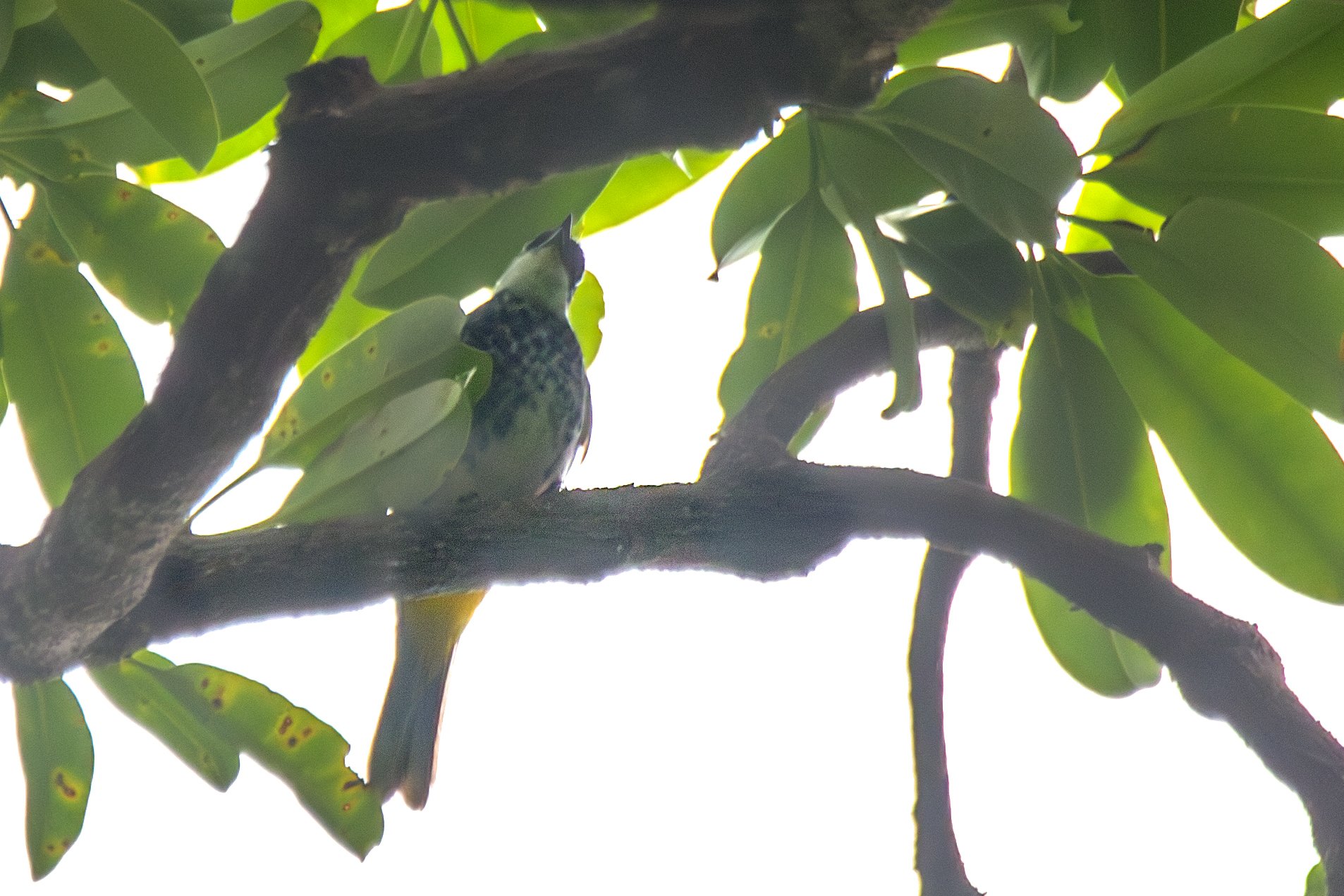
Scaly-Breasted Bulbul, Pantai, Malaysia, August 2024
The Scaly-breasted Bulbul is a distinctive bird with a very high-pitched chirp. Usually encountered in pairs or small groups within dense forest, it feels closely tied to intact woodland. Its Near Threatened status is a gentle reminder of how dependent some birds remain on forests that are slowly shrinking. It moves with a restless, almost nervous energy through the mid and lower forest layers, calling frequently as it feeds. Its finely scaled breast allows it to melt into the dappled forest light. This remains my one and only sighting so far.
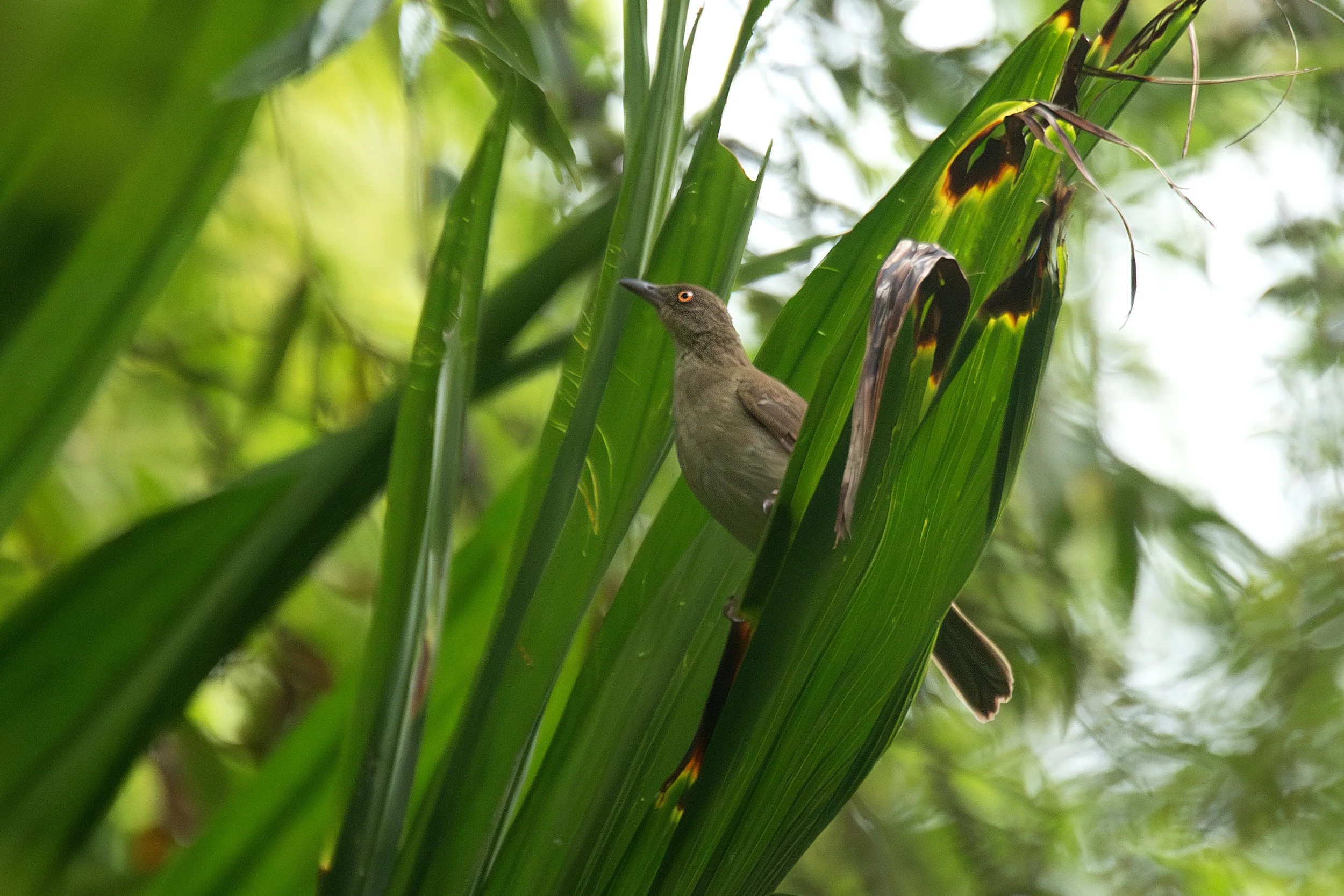
Red-eyed Bulbul, Pantai, Malaysia Aug 2024
A rather plain, nondescript brown bird, offset by a striking dark red iris. A key frugivore, it often feeds in pairs or small, active groups, playing an important role in forest regeneration. Usually encountered in dense lowland forest, it blends easily into the canopy. This remains my only sighting so far.
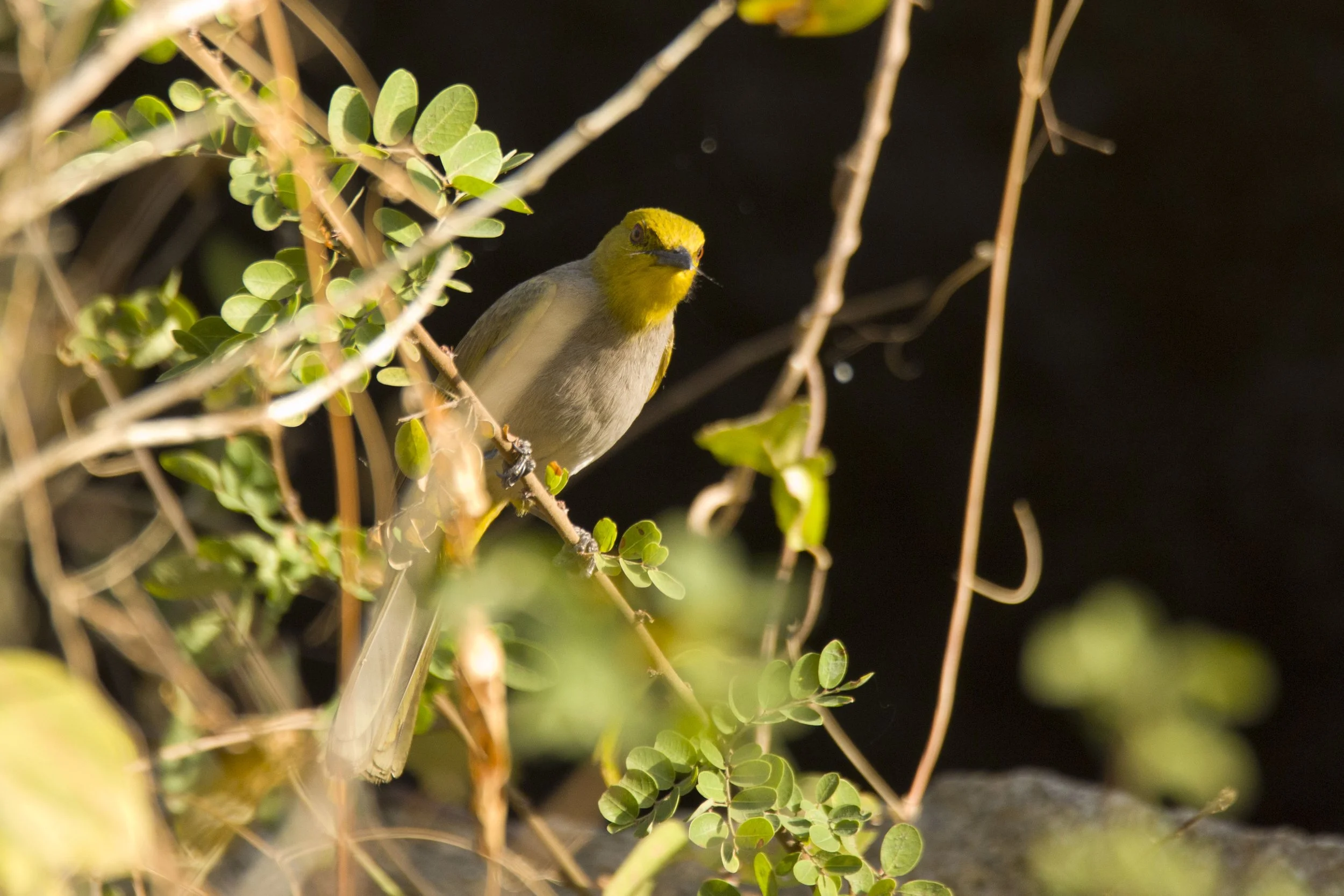
Yellow-Throated, Hampi, India, Feb 2017
The Yellow-throated Bulbul is endemic to southern India. Its numbers are declining due to granite quarrying and the loss and degradation of often unprotected scrub and thorn forests. While it has not yet been classified as Vulnerable, the trend is undeniably worrisome.
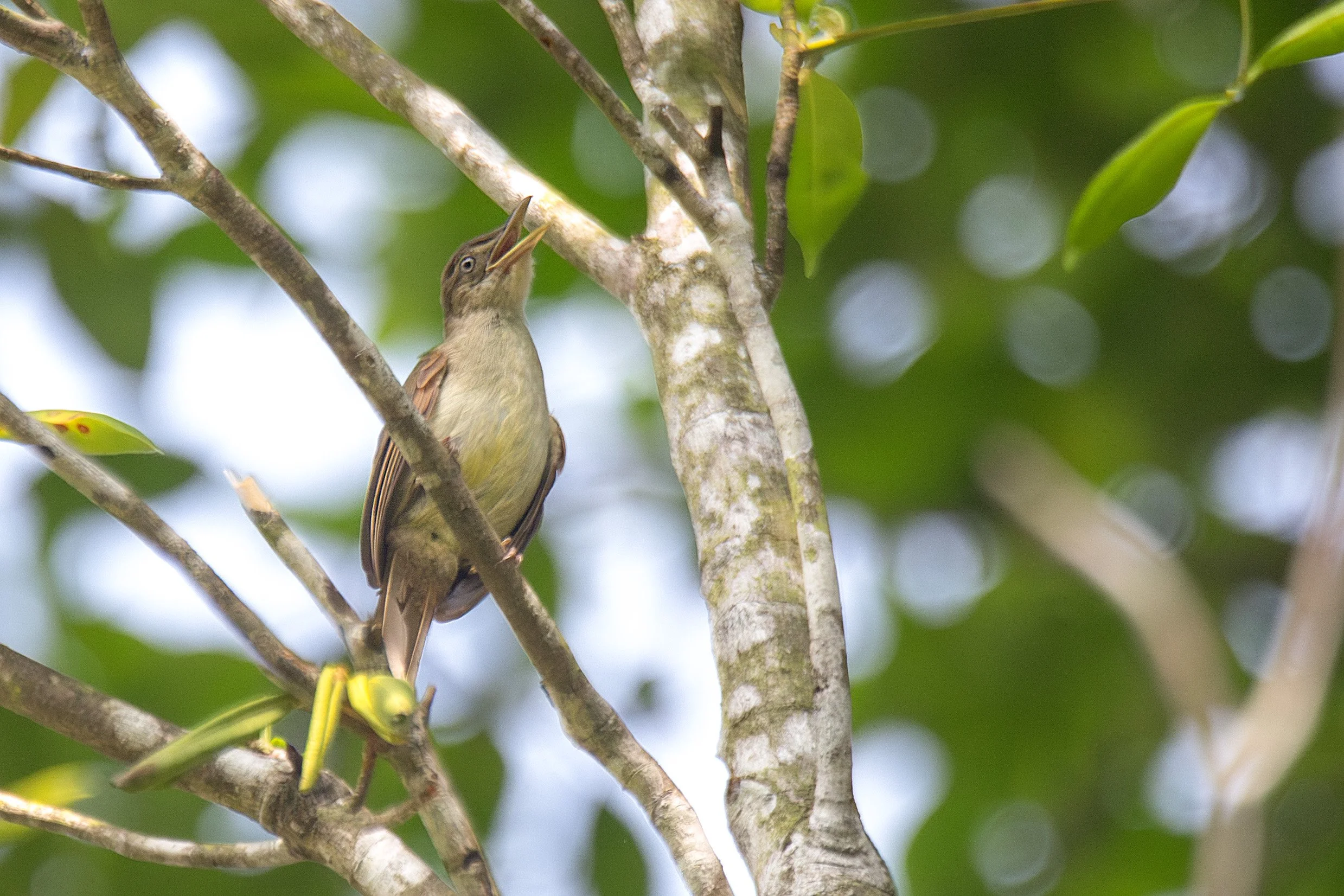
Buff-Vented, Pantai, Malaysia, Aug 2024
The Buff-vented Bulbul’s call is typically a soft, whistling “pee-pee-pee” or a series of high-pitched notes, blending easily into the leafy environments of moist lowland forests.
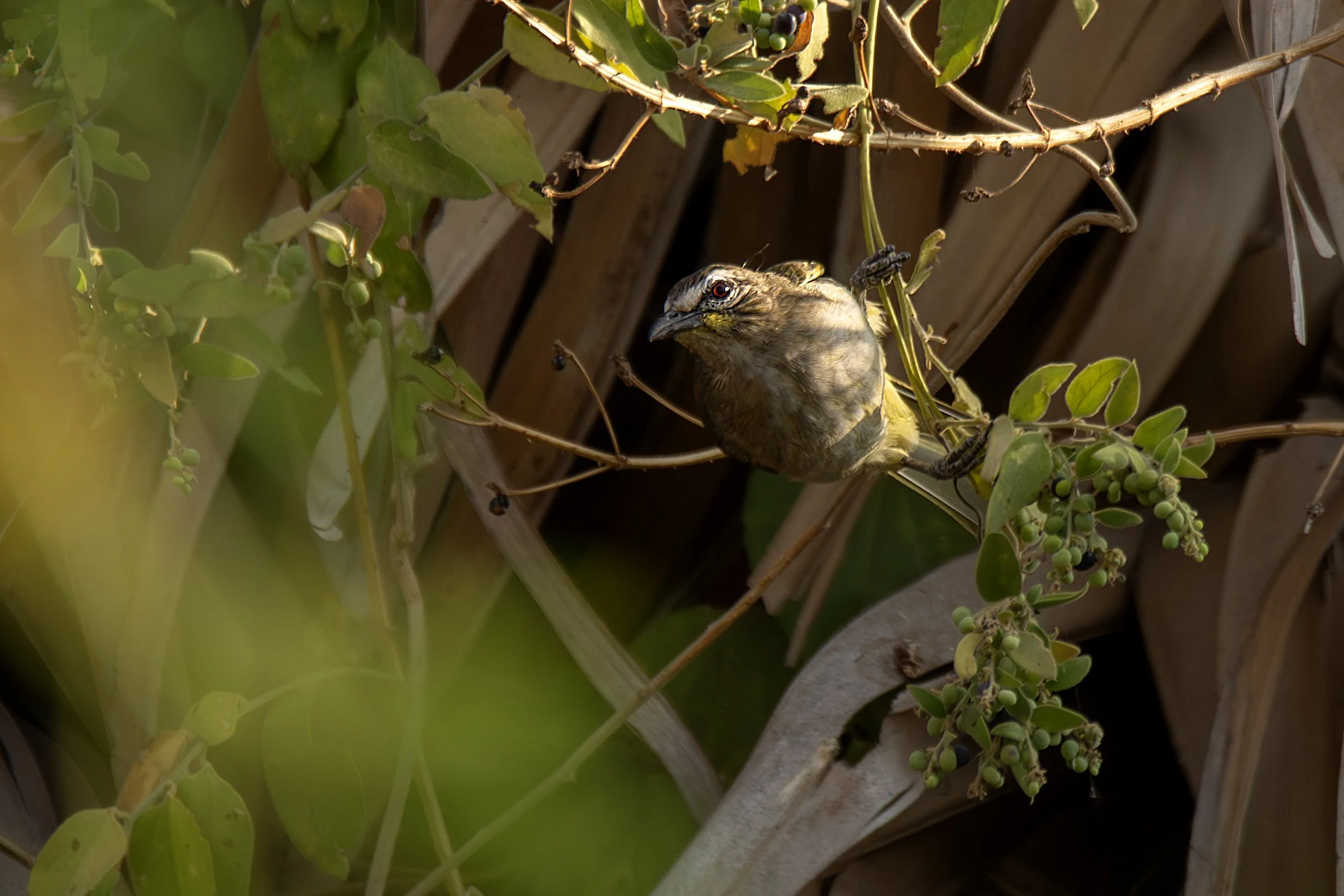
White-Browed, Hampi, India, Feb 2017
Despite its loud, cheerful call, it blends effortlessly into dense bushes and foliage, often remaining unseen. I had to wait patiently before it finally revealed itself. It is highly vocal and responsive, often answering calls of others in the area, yet it prefers to stay low and concealed, darting between bushes rather than flying into the open.
In local ecological narratives, it is seen as a marker of healthy scrubland, a habitat type that is often overlooked but ecologically rich.
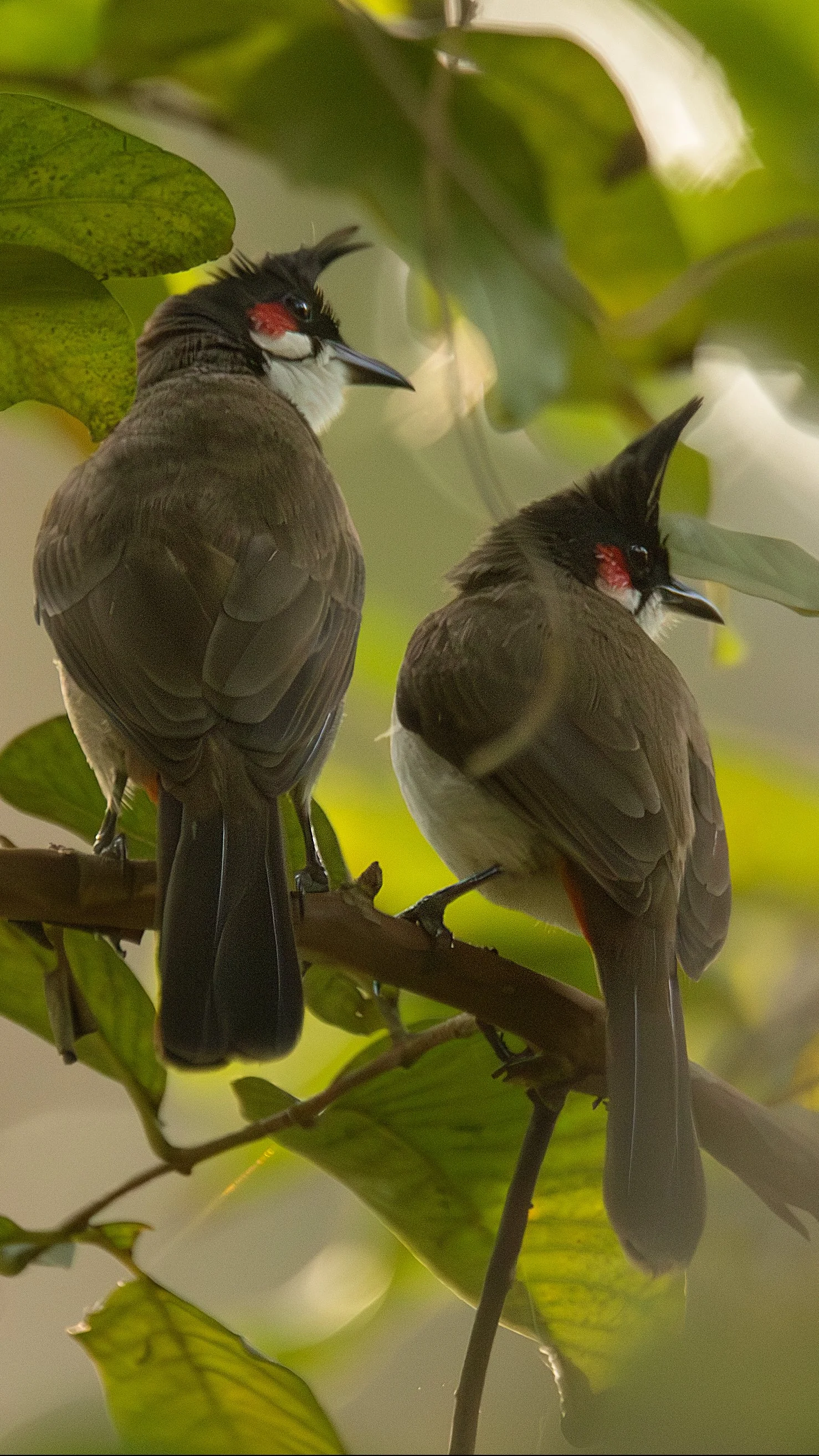
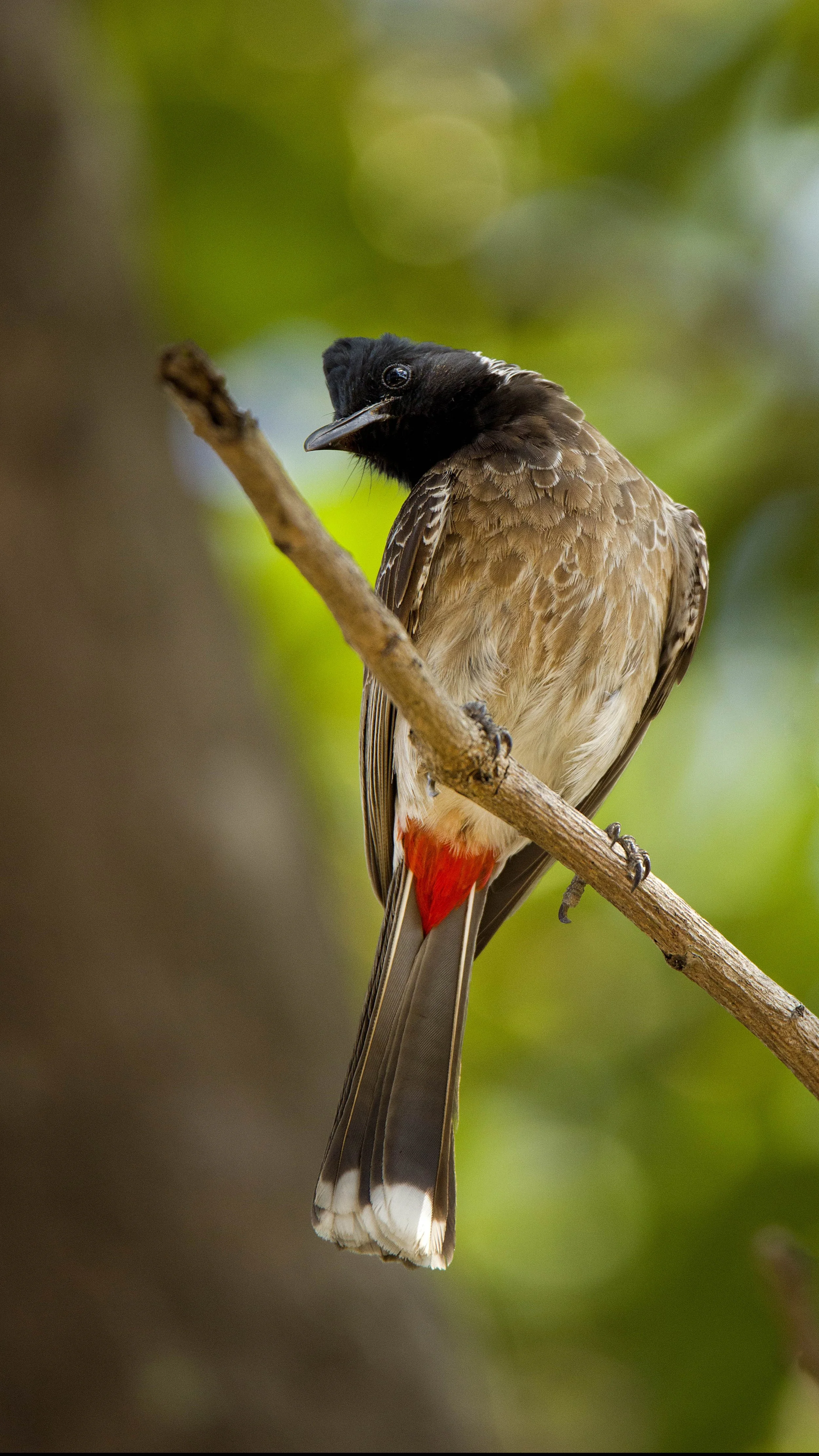
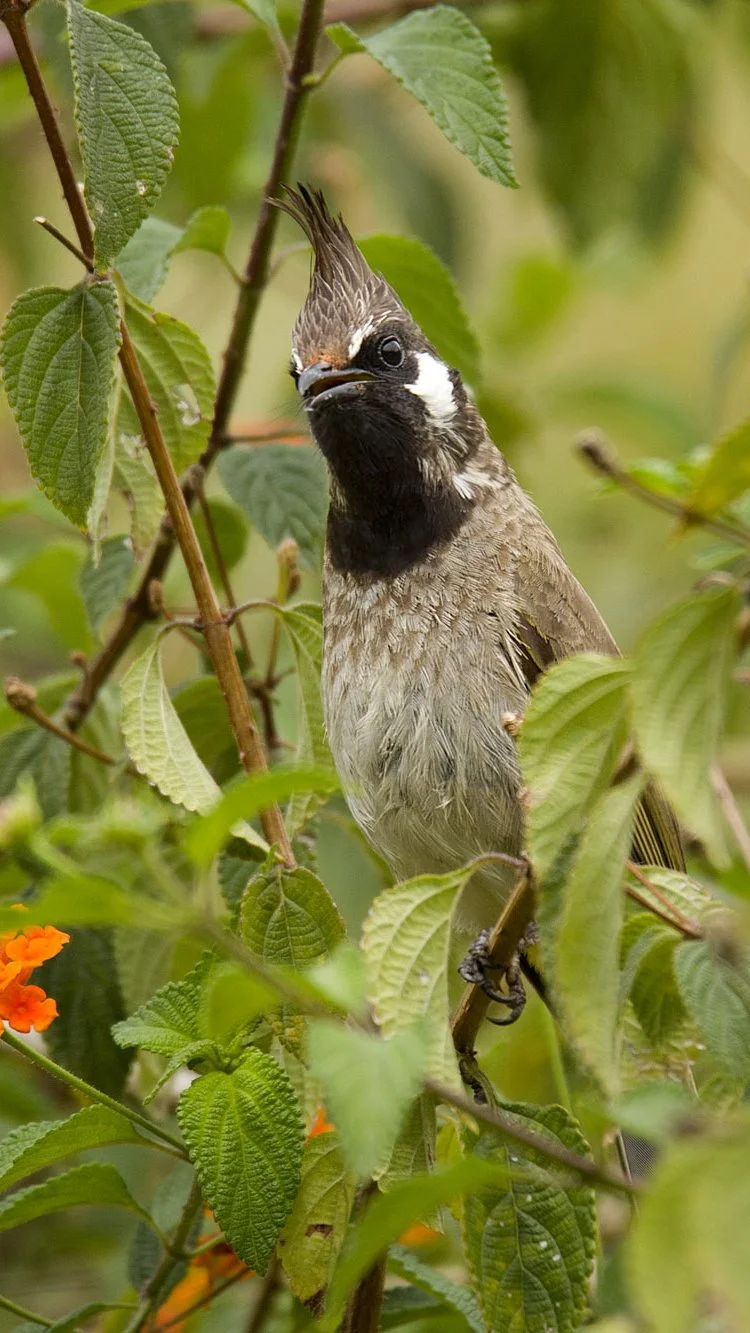
Shown above are three crested bulbuls, among the more commonly seen bulbuls in India.
The Red-vented Bulbul is perhaps the most familiar bulbul in India, thriving in gardens, cities, villages, and forest edges alike. Loud, energetic, and endlessly adaptable, it often announces its presence long before it is seen. Usually found in pairs or small groups, it feeds on fruit, insects, and flower buds, and seems completely at ease around people. Common as it may be, it remains full of character and charm.
So well adapted to human presence, I once saw a pair build their nest among the potted plants on a friend’s balcony.
The Red-whiskered Bulbul is one of the most familiar and confident bulbuls, often seen perched openly and calling loudly. Equally at home in gardens, forest edges, and plantations, it has adapted well to human presence. Usually encountered in pairs or small groups, it feeds on fruit, insects, and nectar, and is often among the first birds to announce itself at dawn. Its bold personality and striking appearance make it hard to miss. The hint of red on the face is quite adorable.
The Himalayan bulbul, with its cool hair-do, is unafraid of people and can often be seen in gardens and parks. Distinguished by its black crest and white cheek patch, it carries itself with a certain poise. Usually encountered in pairs or small groups, it feeds on fruit and insects and seems equally at home in orchards, scrub, and hill settlements. It’s soft, bubbling song often drifts across valleys in the early morning light.
It is a familiar presence in the lower hills, often seen perched conspicuously on treetops, wires, or rooftops. Interestingly, the only time I have encountered a pair outside the hills was in my mother’s garden in Chandigarh.
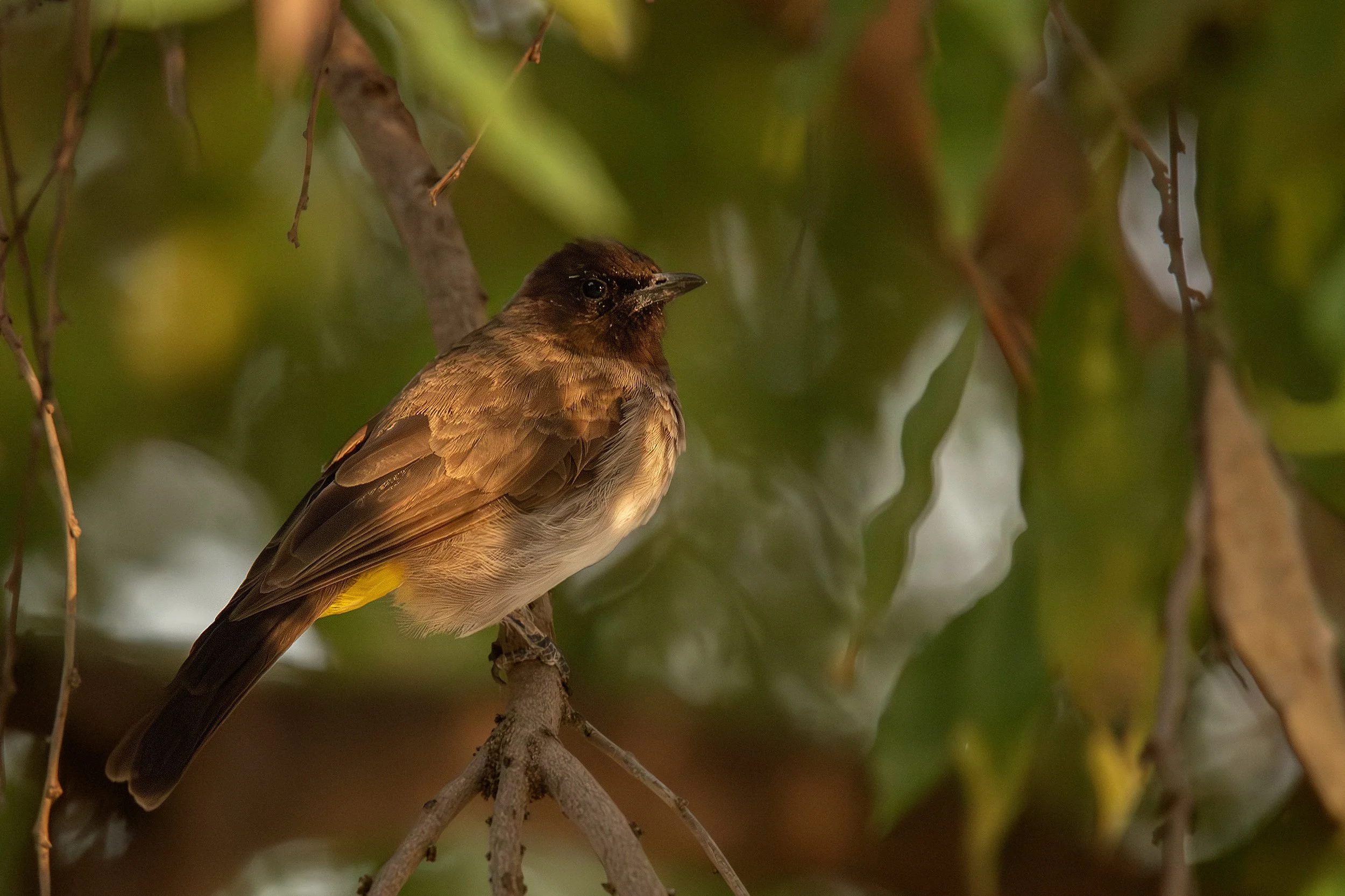
Common Bulbul, Maasai Mara, Kenya 2015
Last but not least, the Common Bulbul, a ubiquitous, noisy, and highly territorial bird, it is often overlooked because of its plain appearance. Found across much of Africa, it resembles the Red-vented Bulbul, but lacks the distinctive red vent.
Vocal, restless, familiar - across continents and cultures, bulbuls remain much the same.
They do not demand attention like rarer birds, yet they stay with you, in gardens, forest edges, balconies, and fruiting trees. Long after the poetry and symbolism fall away, it is their everyday presence - their arguments, their songs, their sudden flashes of movement, that lingers.
Well, seen up close, the bulbul needs no metaphor. It is enough simply to watch, listen, and let it pass through your frame.
शायरों ने उसे मोहब्बत और आरज़ू की निशानी बना दिया
मेरे लिए बस उसका चहचहाना और उड़ जाना ही काफ़ी है
© Harmeet Basur
All photographs have been clicked by Harmeet Basur